Did Choi Seung-hee perform Arirang during her world tour? Of course she did. Arirang was included in the program for her performances in San Francisco, Los Angeles, and New York.
Arirang is one of Korea’s most cherished folk songs. It is comparable to Scotland’s Auld Lang Syne, Ireland’s Londonderry Air, France’s Sur le pont d’Avignon, Germany’s Die Lorelei, and Japan’s Sakura Sakura.
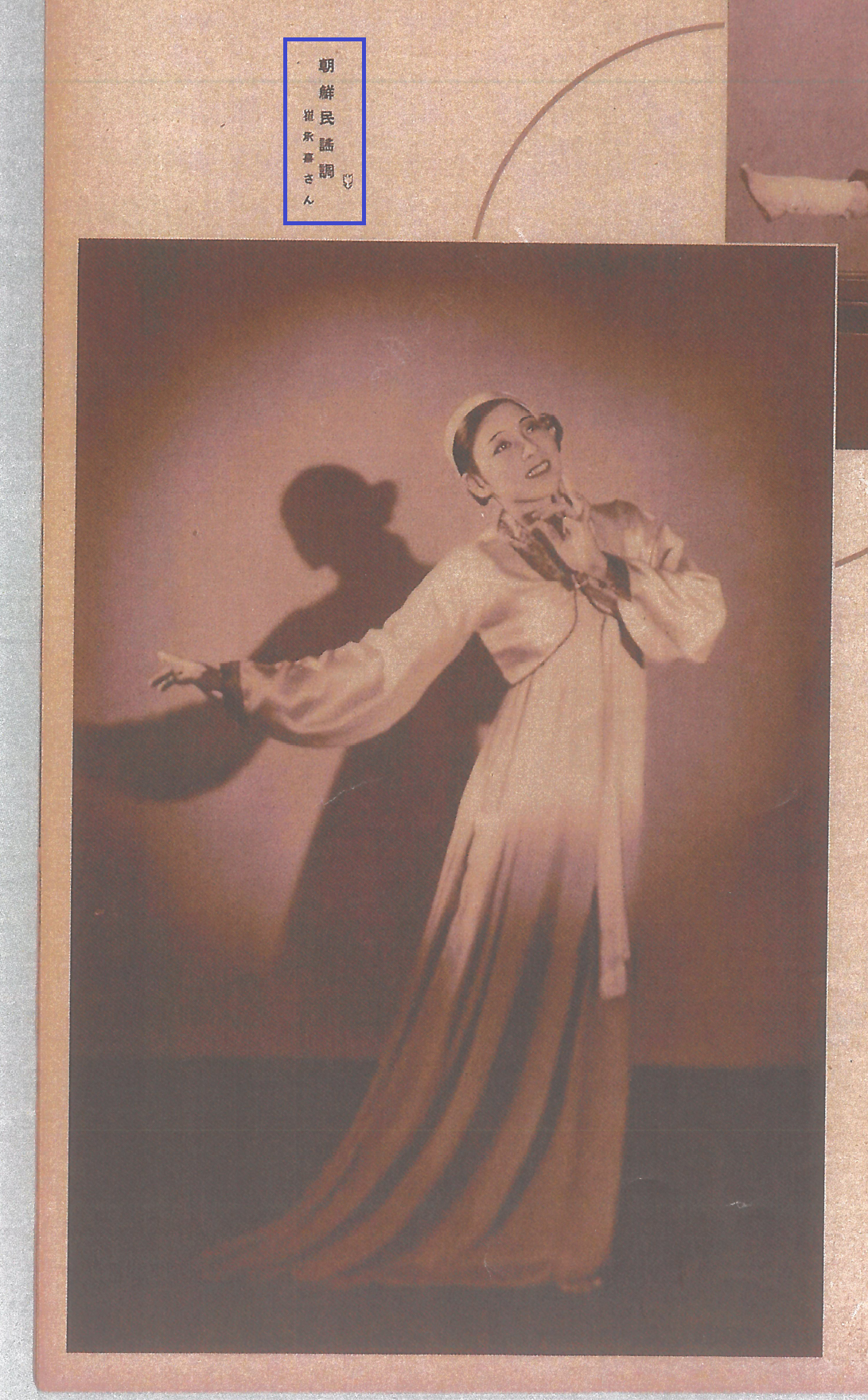
Although South Korea and North Korea have been divided into two nations for over 70 years, people of both countries cherish Arirang as their most beloved folk song, and have even agreed that if they participate as a unified team in the Olympics or world championships, Arirang will be played instead of their respective national anthems.
Arirang is not a single song but a folk song with approximately 60 melodies that have been arranged into over 2,000 variations. Among these, “Gyeonggi-do Arirang,” “Jeongseon Arirang,” and “Miryang Arirang” are the most widely known. Scholars have published research suggesting that Arirang dates back to the late Goryeo and early Joseon periods, that is, the 15th century.
It was only natural that Choi Seung-hee, who had stylized Korean traditional dance into “Chosun Dance” through a process of “modernizing tradition,” would present Arirang during her long waited world tour. The accompanying music for the dance was undoubtedly Arirang, and among its variations, she likely used an arrangement of Gyeonggi-do Arirang.
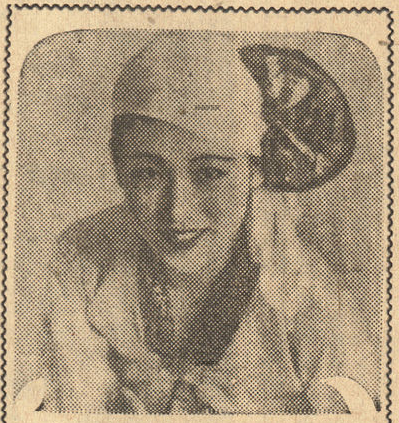
Choi performed Arirang starting with her first U.S. performance in San Francisco. The Japanese-language edition (Page 3) of Nichi-bei Shimbun (January 22, 1938), a newspaper for Japanese Americans in the area, reported Arirang as the fourth piece in Part 2 of Choi’s program, while the English-language edition (Page 2) transcribed it as Ariran. While the Japanese spelling <アリラン> cannot be considered an incorrect translation since it can be pronounced as either 아리랑(Arirang) or 아리란(Ariran) in Korean, the fact that the English edition reporter translated it as Ariran likely stems from his unfamiliarity with the Korean folk song Arirang.
Choi Seung-hee also performed Arirang at her Los Angeles concert. The English edition of the Kashu Nichinichi Shimbun (February 2, 1938, p. 5) reported on 12 program items, listing Korean Sweetheart’s Farewell as the fourth item. The reason the name Arirang was not used was likely because the reporter sought to describe the content of the piece rather than rely on an unfamiliar proper noun. The use of the word farewell was likely due to the lyrics, “My beloved, who is leaving me behind…” The Sinhanminbo (February 10, p. 2), a newspaper for the Korean Americans, referred to the fourth work of Part 1 of this performance as the Arirang Dance and described it as “a dance of parting with a beloved.”
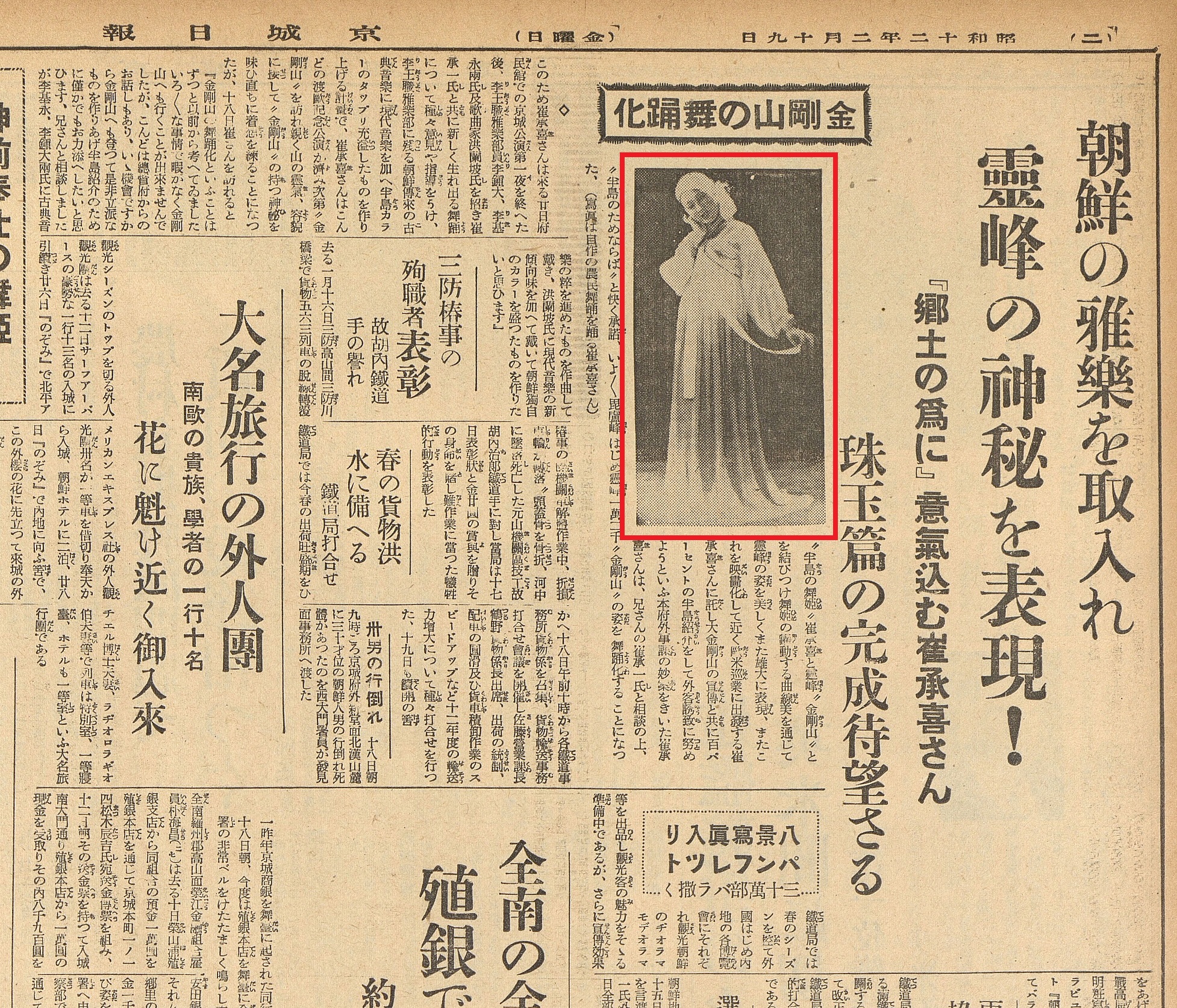
Arirang was also performed at the Guild Theater in New York City on February 20, 1938. The New York Times on February 21, 1938, and the Tokyo Asahi Shimbun (Page 2) on February 22 reported that Choi Seung-hee’s “Korean dances such as The Wanderer of Korea, The Story of Arirang, and The Country Girl and the Train received favorable reviews.” Even the newspapers published in Korea, not only the Korean-language newspapers such as Dong-A Ilbo, Chosun Ilbo, and Maeil Sinbo, but also the Japanese-language newspapers Gyeongseong Ilbo and Chosun Shinbun reported that Arirang was included in the New York performance.
Arirang Story (アリラン物語) premiered during Choi Seung-hee’s third Tokyo performance, held from September 22 to 24, 1936. This work was also continuously performed during the “Farewell Tour” held in Japan, Korea, and Manchuria in 1937. The Manchu Nichi Nichi Shimbun (Page 7) on February 9, 1937, and the Chosun Ilbo (Page 7) on February 19 also reported on The Melody of Arirang (아리랑의 선율, アリランの旋律), and In Honor of Arirang (아리랑에 부쳐, アリランに寄与す) was included in the program for the Tokyo Theater performances held from September 27 to 29, 1937.

However, the premiere of Arirang took place even earlier. On October 22, 1935, at a performance held at the Hibiya Public Hall in Tokyo, Choi Seung-hee presented Arirang, though it had a different name at the time. The title then was Three Korean Melodies. This work was a suite consisting of three short pieces, and the second piece was titled Folk Song Tune. The costumes for this Folk Song Tune are identical to those of the work released in 1936 under the title The Story of Arirang. It is clear that the title of Folk Song Tune was changed to Arirang.
In sum, Choi Seung-hee’s dance piece Arirang premiered under the title Folk Song Tune at the 3rd Tokyo Performance in 1935, and it was performed under titles such as The Melody of Arirang and In Honor of Arirang and The Story of Arirang during the farewell performances held in various regions in 1937, and was finally presented under the title Arirang in San Francisco, Los Angeles, and New York during the 1938 tour of the U.S. (jc, 11/30/2025; 3/31/2026) ⓒCHO Jeong-hee
'최승희100장면' 카테고리의 다른 글
| [崔承喜100シーン] 24. 僧の舞 (0) | 2026.04.05 |
|---|---|
| [최승희 100장면] 24. 승무 (0) | 2026.04.05 |
| [崔承喜100シーン] 19. アリラン (0) | 2026.04.03 |
| [최승희 100장면] 19. 아리랑 (0) | 2026.04.03 |
| [Choi Seung-hee 100 Scenes] 8. Honeymoon Dance (염양춘) (0) | 2026.04.03 |


