In the summer of 2025, the animated film K-Pop Demon Hunters was released. The film was produced by Sony Pictures and distributed by Netflix. Known by its abbreviation “Kedehun,” the film took the world by storm. In 2026, it won two Golden Globe Awards (for Best Original Song and Best Animated Feature) and two Academy Awards (for Best Original Song and Best Animated Feature), and it was announced that a sequel would be produced around 2029.
While watching this film, I felt a strange sense of “déjà vu,” but it wasn’t until six months later that I realized why. It was when I was writing the manuscript for Mudang Dance, that is, the Shaman Dance, for my incoming book, the Choi Seung-hee 100 Scenes. Kedehun reminded me of Choi Seung-hee’s Chosun Dance (조선무용) performances, and Kedehun’s theme song, “Golden,” felt like a reenactment of Choi’s Shaman Dance.

Shaman Dance premiered at Choi’s second Tokyo recital held at the Hibiya Public Hall on October 22, 1935. Given that it was not performed at the Nagoya performance held six months earlier (May 9, 1935, at the Nagoya City Public Hall), the creation of Shaman Dance likely took place between May and October 1935.
At the 2nd Tokyo Recital, photographs of Shaman Dance were sold as bromides at the venue, the Hibiya Public Hall. Photographs of Shaman Dance, taken alongside the admission tickets, have been preserved to this day. In these photographs, Choi Seung-hee is seen wearing a tall hat adorned with peacock feathers, holding a fan in one hand and a rattle in the other. Photographs of Choi’s Shaman Dance have been discovered in various locations where her tours took place in Japan, Korea, and around the world.

The pamphlet for Choi’s third Tokyo performance, held on September 22, 1936, featured photographs of Shaman Dance on both the front and back covers. These same photographs also appeared on the covers of the programs for the performances at the Takarazuka Theater in Kyoto, held from January 27 to February 2, 1937, and for the Tohoku tour held in July 1937.
Photographs of Choi’s Shaman Dance also appeared in various magazines. These included women’s magazines such as Fujokai(婦女界, April 1936) and Shufunotomo(主婦之友, February 1937), cultural and arts magazines such as Dance Japan(舞踊日本, September 1936) and Music News(音樂新聞, early September 1936), current affairs magazines such as Political Journal (政界往來, December 1936), photography magazines such as Asahi Graph(朝日グラプ) and Camera Graph(カメラグラプ), weekly magazines such as Weekly Asahi(週刊朝日) and Sunday Mainichi(サンデー每日), and Korean general-interest magazines such as Samcheolli(삼천리) (December 1936).
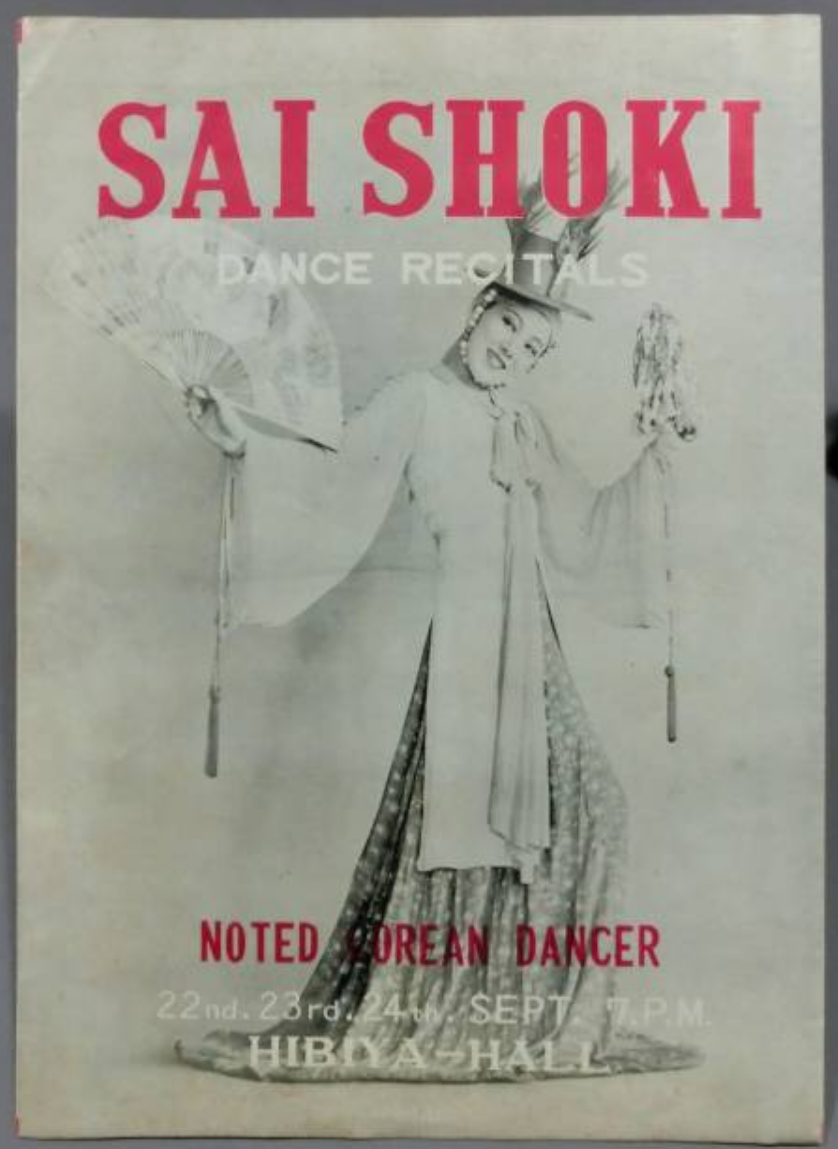
If the latter half of the 20th century was the golden age of television, the first half was the that of magazines and radio. Japanese magazines, in particular, were distributed throughout Japan, Korea, Manchuria, Northern China, Taiwan, and Southeast Asia, with many titles exceeding a circulation of one million copies. Photographs of Choi’s dance performances appeared in these magazines, spreading throughout the Japanese Empire on a monthly or weekly basis, and Shaman Dance became known as Choi’s signature work within just one or two years of its premiere.
Shaman Dance also gained widespread recognition in Europe and North and South America. Around the time of the San Francisco performance on January 22, 1938, the photograph of Shaman Dance appeared most frequently in newspaper articles and advertisements. Among the 15 works performed by Choi in San Francisco, the piece introduced in English as Fortune Teller was Shaman Dance.

Photographs of this piece appeared in many newspapers. On January 17, just before the San Francisco performance, they were first published in the Madera Tribune (front page), a daily newspaper in Madera, CA near San Francisco, and in the Napa Journal (front page), a daily newspaper in Napa County. The words “United Press” are visible in the lower right corner of this photograph, indicating that the photo was distributed via the UP news agency. Choi Seung-hee’s agency launched a promotional campaign through the UP, and the photograph used for this campaign was Shaman Dance.
Photographs of Choi’s Shaman Dance can be found not only in California but also in other parts of the United States: in the eastern U.S., the Pittsburgh Post-Gazette (January 17, 1938, front page) in Pennsylvania, and the Henderson Daily Dispatch (January 18, 1938, Page 6) in Henderson County, North Carolina, in the southern United States. A photograph of Choi’s Shaman Dance was also published in the weekly news magazine Newsweek (February 28, 1938, p. 28).
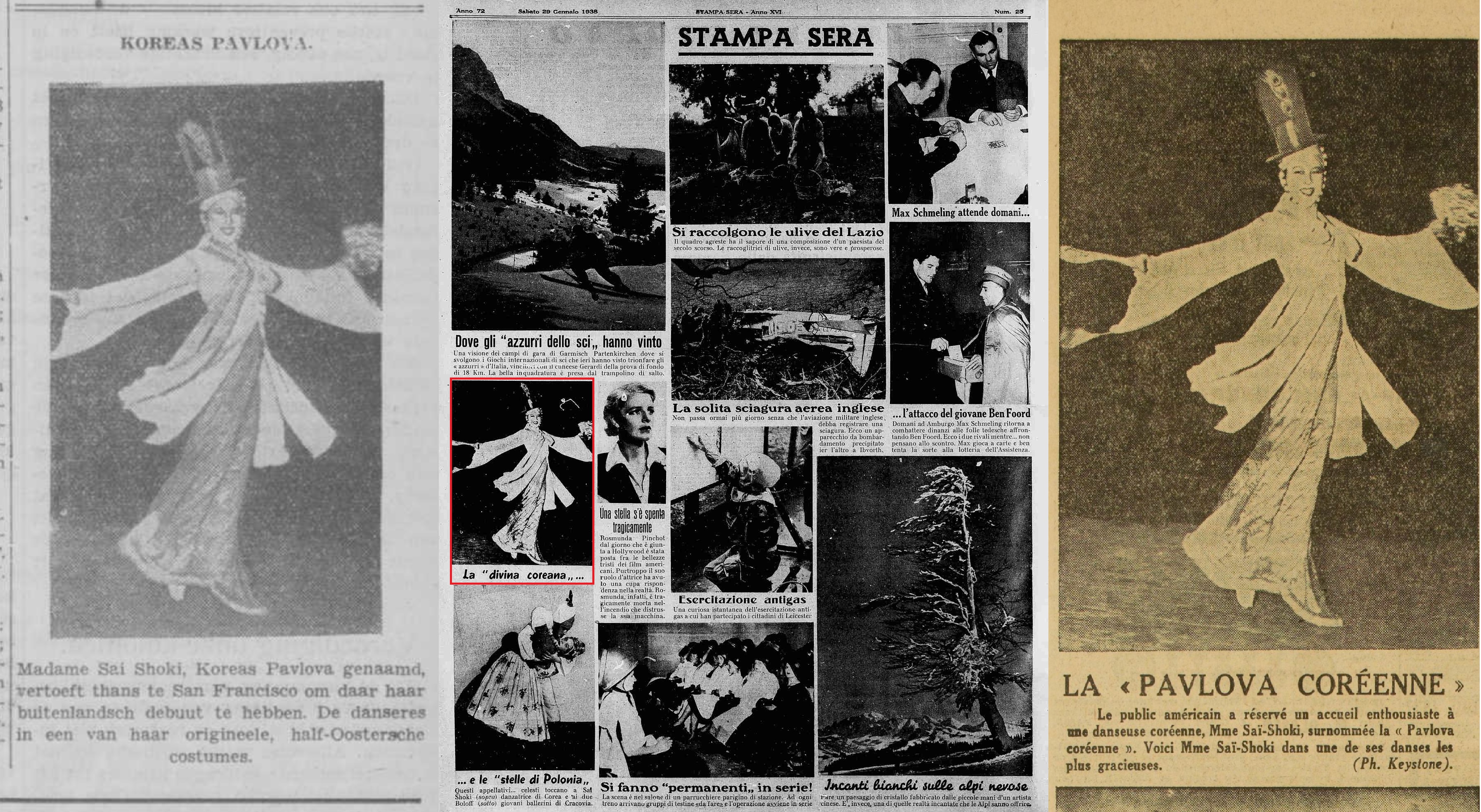
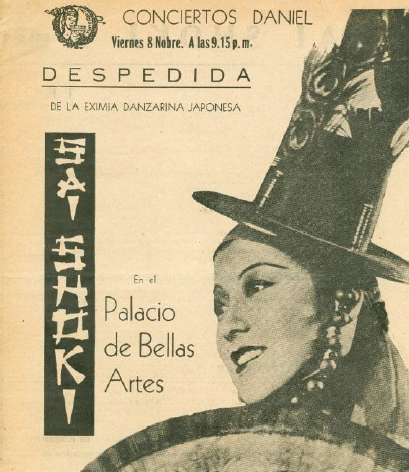
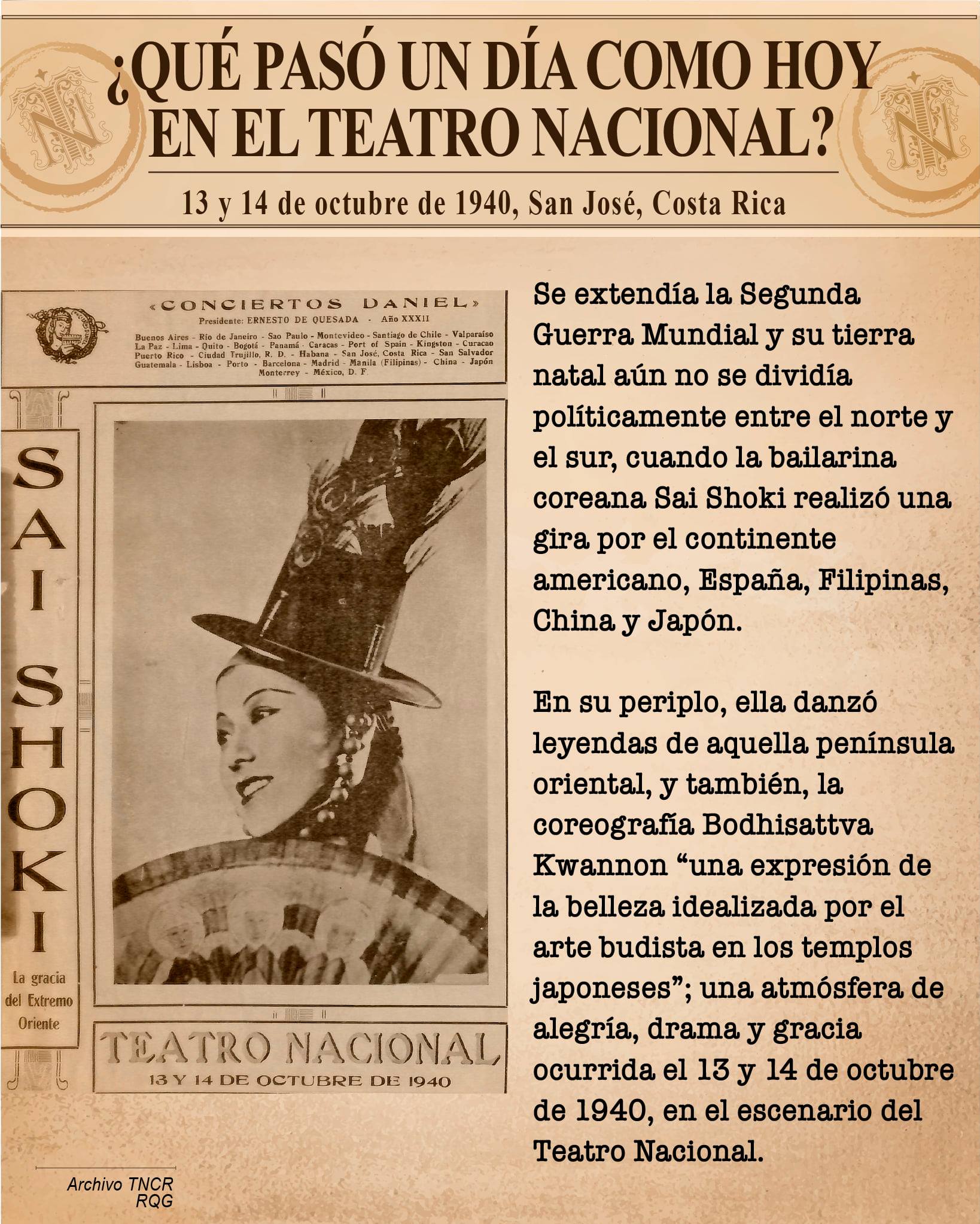
The photograph of Shaman Dance was not distributed only in the United States. It also appeared in Italy’s Stampa Sera (January 29, 1938, p. 25), France’s Le Grand Echo du Nord (January 30, 1938, p. 22), Switzerland’s L’Impartial (February 3, 1938, p. 1), and the Netherlands’ Arnhemsche Courant (February 8, 1938, p. 7). Furthermore, photographs of Shaman Dance appeared in the Choi's programs for the April 1940 performance in Puerto Rico and the October 1940 performance in Mexico.
Why did Shaman Dance (1935)—which premiered later than Choi Seung-hee’s early masterpieces such as Eheya-noara (에헤야노아라, 1933), Seungmu (승무, 1934), and Geommu (검무, 1934)—gain the most widespread publicity and popularity during the early stages of her world tour? I believe the reason is the same as that behind the Kedehun phenomenon. Setting aside differences in genre, style, and medium, Shaman Dance and Kedehun share common thematic characteristics.

The three Huntrixes, the protagonists of Kedehun, are hunters who try to capture demons. In that their mission is exorcism, they are priestesses—which in Korean are “mudangs (무당s, shamans).” These three shamans carry out their jobs through K-pop performances, which function as gut(굿), that is, shamanic ritual. If the Huntrix’s K-pop performances are guts, then Choi Seung-hee’s Chosun Dance performances 90 years ago could also be viewed as guts.
Chosun society in the 1930s and Korean society in the 2020s are completely different. The problems faced by Chosun and her people, who were groaning under Japanese colonial rule, were very different from those faced by Korea and her citizens, who have achieved economic growth and political democratization. However, there is a commonality in the way they recognize and address problems. That is the method of the “gut.”

When faced with a problem, Koreans tend to seek its causes both within and without. External enemies are demons or foreign powers, while internal enemies are one’s own shortcomings and moral failings. These two enemies—internal and external—are interconnected. This is because one’s own shortcomings invite foreign powers, and one’s moral failings summon demons.
Therefore, to resolve a problem, one must replenish one’s shortcomings and purify one’s moral failings while simultaneously repelling foreign powers and evil spirits. When one cannot accomplish this alone, one seeks the help of a shaman. The shaman’s job, which bridges the real world and the spirit world, is to help people overcome everyday crises and communal hardships.
Shamans fulfill their mission through song and dance, and this ritual is known as a “gut.” In the sense that they perform the “gut” through dance and music, Huntrix’s K-pop performances and Choi Seung-hee’s traditional Korean dance performances share a commonality.

The fact that Chosun Dance received worldwide acclaim 90 years ago and that today’s Kedehun is gaining popularity is likely because they force Korean people to confront real-world problems and offer ways to resolve them. The role of a Korean shaman differs from that of an American superhero. While a superhero’s role is as unrealistic as it is fantastical, a Korean shaman, despite her superstitious exterior, plays a highly realistic role.
Choi Seung-hee prepared 25 Chosun Dance pieces for her world tour. These works were performed during the farewell concert for her upcoming world tour, at the Tokyo Theater from September 27 to 29, 1937. Among them, the 17th piece, Shaman Dance, was performed most frequently in the United States, Europe, and South America. Just as Huntriks’ Golden was the theme of Kedehun, Choi’s Shaman Dance was a title work of her Chosun Dance. The following is an excerpt from the lyrics of “Golden.”
“I lived two lives, tried to play both sides,/ But I couldn't find my own place./ I'm done hiding, now I'm shining like I was born to be/ ... We're going up, up, up, it's our moment.”
Choi Seung-hee, a Korean who was treated as a Japanese due to the colonial situation, found herself in precisely such a predicament. To overcome this dilemma, Choi Seung-hee performed Shaman Dance, a Chosun Dance, all over the world. Messages that could not be expressed in words were conveyed to the world through her dance movements, and the more she did so, the more she was elevated, eventually becoming a shining figure known as a world-class Korean dancer.
There is good reason to call Choi Seung-hee the “pioneer of the Hallyu, the Korean Wave.” Shaman Dance is a prime example. Choi Seung-hee’s Shaman Dance, performed 90 years ago, was a precursor to Golden, the theme song of today’s Kedehun. (jc, 11/18/2025; 3/30/2026) ⓒCHO Jeong-hee
'최승희100장면' 카테고리의 다른 글
| [崔承喜100シーン] 8. ヨムヤンチュン(艶陽春) (0) | 2026.04.03 |
|---|---|
| [최승희 100장면] 8. 염양춘(艶陽春) (0) | 2026.04.03 |
| [崔承喜100シーン] 18. 巫女舞 (0) | 2026.04.02 |
| [최승희 100장면] 18. 무당춤 (1) | 2026.04.02 |
| [Choi Seung-hee 100 Scenes] 6. Yin Lihua (陰麗華) (0) | 2026.04.01 |


