An article titled “Miss Choi Seung-hee, Korea’s New Prodigy” appeared on page 5 of the Japanese-language edition of the Nichi-Bei Shimbun, a Japanese American newspaper published in San Francisco, on December 13, 1937. This report came after it was announced that Choi Seung-hee’s world tour had been finalized and that her first destination would be San Francisco, CA. The article begins as follows:
“Miss Choi Seung-hee (24), a ‘Yin Lihua’ born in Korea who is blossoming on the stage of her homeland, is set to embark on a tour of Europe and the Americas. She is scheduled to travel to the United States aboard the Hirakawa Maru(永川丸), which is due to depart on the 17th, and will pass through Seattle, San Francisco, and Los Angeles before arriving in New York in January. ”
Choi Seung-hee actually departed from Yokohama on December 29, about two weeks later than the article had predicted, and her ship was the Chichibu Maru(秩父丸), not the Hirakawa Maru. Since the first U.S. tour did not include a performance in Seattle and she did not arrive in New York until February, the report in the Nichibei Shimbun contains many inaccuracies.
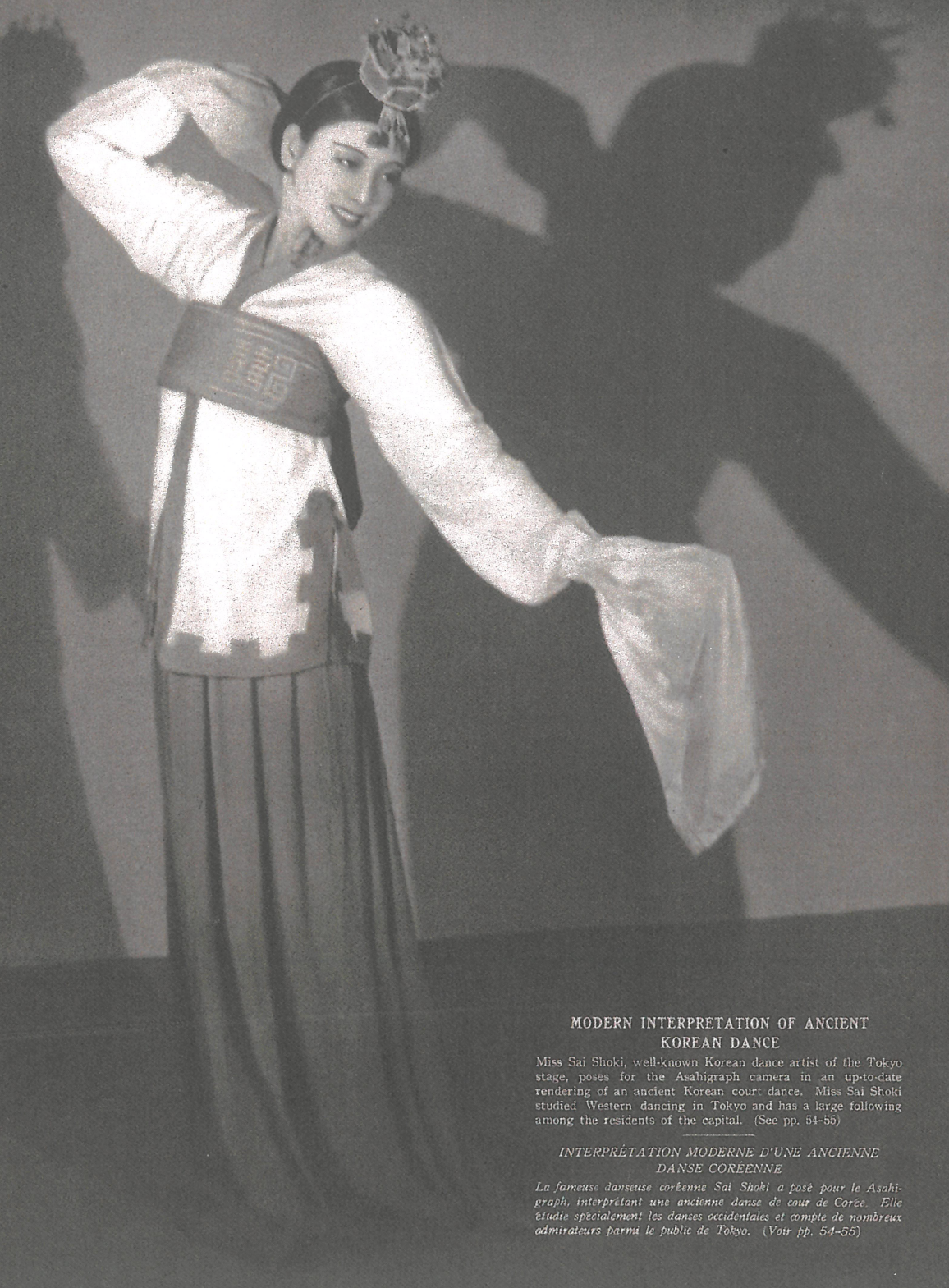
However, the name “Yin Lihua” in the article’s opening sentence catches the eye. What does “Yin Lihua, born of Korea (朝鮮の生んだ陰麗華)” mean? I sent a text message to Mr. Toshio Murayama(村山捘夫), a Japanese writer who has often assisted me with my research on Choi Seung-hee.
Mr. Murayama explained that Yin Lihua was “a beautiful and virtuous Chinese empress” and sent me a link to Wikipedia. While entries exist in the English, Japanese, and Chinese versions, there is no entry in the Korean version. This means she is a figure not well known in Korea.
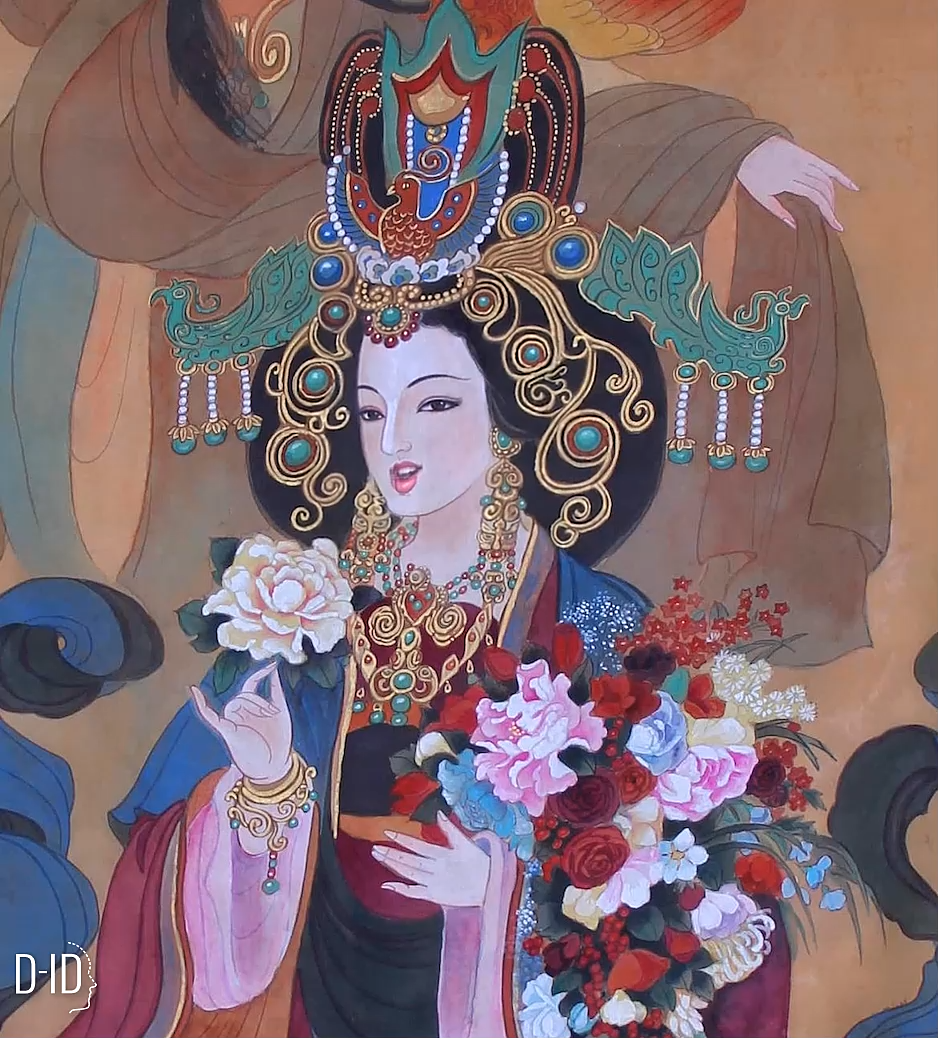
While the Korean pronunciation of the Chinese characters is “Eumryeohwa,” the Chinese pronunciation is “Yin Lihua (陰麗華, AD 5–64).” She was the first wife and second empress of Liu Xiu (劉秀, BC 5–AD 57), the founding emperor of China’s Later Han Dynasty (後漢), known as Emperor Guangwu (光武帝). The reason his first wife became his second empress was that Liu Xiu had previously made Guo Shengtong (郭聖通, AD 6–52), whom he had married for political reasons, his first empress.
According to the Book of the Later Han(後漢書), Liu Xiu had set a life goal from his youth: “I shall serve as Zhijinwu and marry Yin Lihua (仕官當至執金吾, 娶妻當得陰麗華).” Since the Zhijinwu was the mayor of the capital, this meant he intended to become emperor. Liu Xiu married Yin Lihua in AD 23, just as he had planned; Liu Xiu was 28 years old, and Yin Lihua was 18. He ascended to the imperial throne in AD 25, at the age of 30. He reunified China in AD 37 at the age of 42.
The reign of the Chinese Emperor Liu Xiu (AD 25–57) overlapped with the reigns of four Roman emperors. In other words, while Tiberius (AD 14–37), Caligula (AD 37–41), Claudius (AD 41–54), and Nero (AD 54–68) held onto their imperial power for brief periods amid conflict and strife, Liu Xiu ruled a unified China for approximately 32 years.
Wang Fuzhi (1619–1692), highly praised Liu Xiu as the emperor who achieved “the most prosperous era since the Three Dynasties (三代以下稱盛治),” meaning that Emperor Guangwu Liu Xiu was the first to bring about such a golden age since the Xia, Shang, and Zhou dynasties (2070–770 BC).
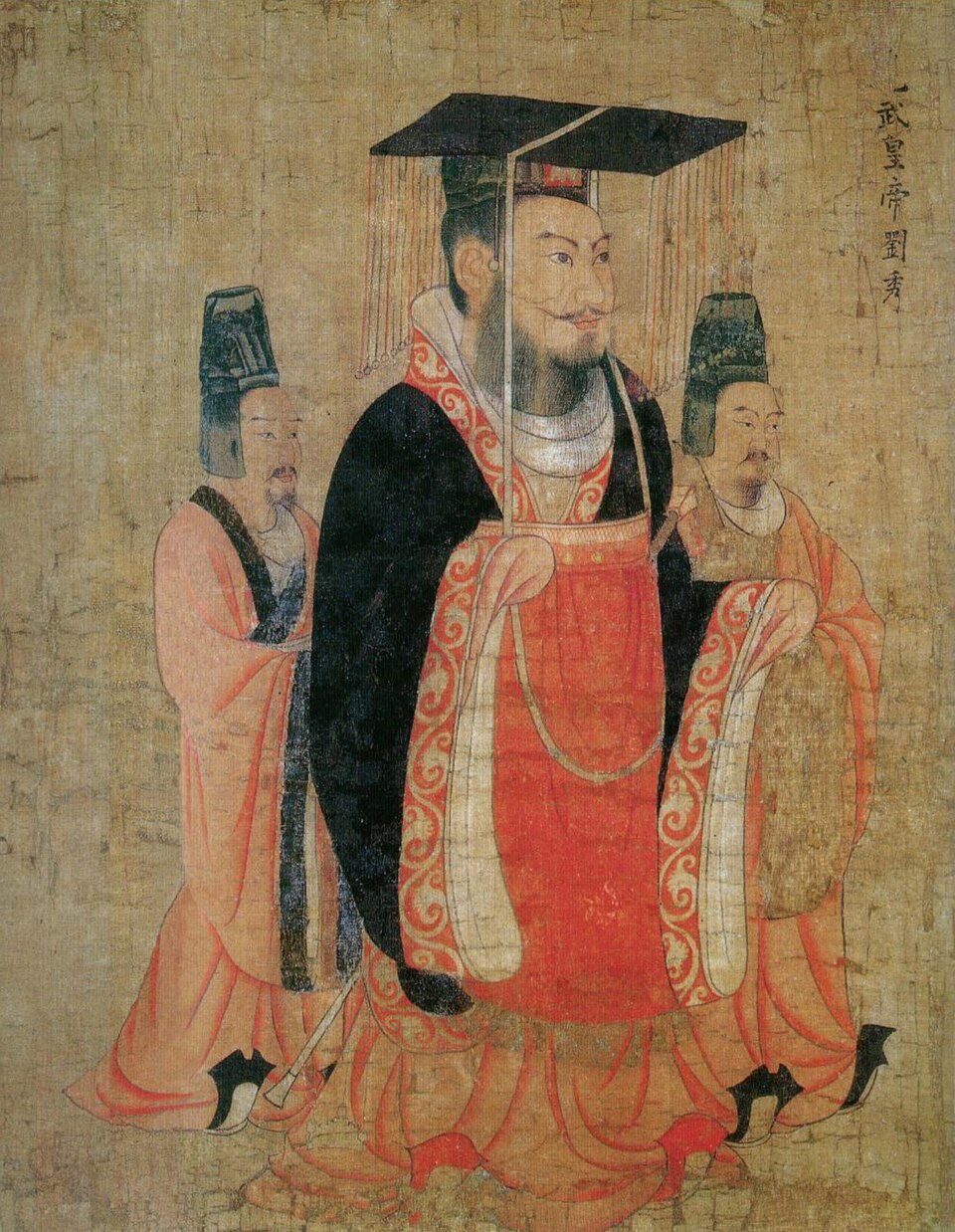
Immediately after ascending the throne, Liu Xiu intended to name Yin Lihua as empress, but she refused. Her reason was that she had not yet given birth to a son. Liu Xiu complied with Yin Lihua’s request and instead enfeoffed his second wife, Guo Xentong, as Empress. Later historians praised Yin Lihua’s modesty and virtue for this. Subsequently, Yin Lihua gave birth to five sons.
When Guo Xentong, resentful of having lost the emperor’s favor, caused trouble, Liu Xiu deposed her as empress in AD 41 and crowned Yinlihua as empress. Even after her deposition, Guo Xentong not only survived but also enjoyed wealth and honor, and her eldest son, who had been stripped of his title as crown prince, received extensive lands. Guo Xentong died in AD 52 and was mourned by Liu Xiu and Yin Lihua.
After Liu Xiu died in AD 57 at the age of 62, Yin Lihua became Empress Dowager, and her eldest son ascended the throne as the second emperor of the Later Han Dynasty. Yin Lihua died in AD 64 at the age of 59, while her son was still emperor.

Because of this historical context, Empress Yin Lihua was praised as an empress worthy of Emperor Guangwu, who revived the Han dynasty. She did not covet her position as empress or her son’s position as crown prince, yielding them to Guo Xentong and her son; yet, in the end, those positions returned to her and her son.
These days, this could be summarized by the saying, “Talent cannot overcome hard work, and hard work cannot overcome luck,” but for the past two thousand years, the Chinese have assessed that Yin Lihua was able to enjoy both wealth and honor because she shunned greed and maintained the virtue of humility.
The article in the Nichibei Shimbun that described Choi Seung-hee as “the Yin Lihua born in Korea” does not reveal the name of the reporter who wrote it. Although we do not know who he/she was, as a Japanese American residing in the United States, he/she must have been well-versed in Korean situation and Chinese history. His/Her comparison of Choi Seung-hee to Yin Lihua was likely not based solely on her beauty. It was likely a compliment meant to highlight her beauty combined with the virtue of modesty.

Korean history is also rich with legendary beauties. These include Lady Gwan-na of Goguryeo, the wife of Domi of Baekje, Mishil, Princess Seonhwa, and Lady Suro of Silla, Queen Ki of Goryeo, and Eo U-dong, Jang Nok-su, Hwang Jin-i, and Jang Hui-bin of Joseon dynasty. Among them, the beauties who were praised not only for their looks but also for their wisdom, integrity, and virtue would be the wife of Domi, Princess Seonhwa, Lady Suro, and Hwang Jin-i. Among them, the high-ranking beauties who enjoyed happy endings would be Princess Seonhwa, who became the empress of King Mu of Baekje, and Lady Suro, who was admired by both the court and the common people. However, the Japanese journalist who wrote this article could not have known about Princess Seonhwa or Lady Suro.
Japan also had its own legendary beauties. Among them were Onono Komachi(小野小町), the beautiful poet of the Heian period; Yodo-dono(淀殿), who enjoyed the favor of Toyotomi Hideyoshi during the Warring States period; and Hojo Masako(北条政子) of the Kamakura period, who combined beauty with political acumen.
It is a little surprising that the reporter from the Nichibei Shimbun compared Choi Seung-hee to a beautiful Chinese empress rather than to beauties from Korea or Japan. In fact, it is a witty and original expression. If he had compared her to Yang Guifei(楊貴妃) or Zhao Xian(貂蟬), two of China’s most famous beauties, it would have been cliché. Although not widely known to Koreans, this article, which compares Choi Seung-hee to a Chinese beauty who possessed both beauty and virtue, still feels fresh even when read 90 years later. (jc, 11/27/2025; 3/29/2026) ⓒCho Jeong-hee
'최승희100장면' 카테고리의 다른 글
| [崔承喜100シーン] 18. 巫女舞 (0) | 2026.04.02 |
|---|---|
| [최승희 100장면] 18. 무당춤 (1) | 2026.04.02 |
| [崔承喜100シーン] 6. イン·リフア(陰麗華) (0) | 2026.04.01 |
| [최승희 100장면] 6. 인리화(陰麗華) (1) | 2026.04.01 |
| [100 Scenes of Choi Seung-hee] 5. New York (0) | 2026.03.31 |


